
Liverpool Women’s forward, Rinsola Babajide believes that “more can be done” in terms of improving the finance in the women’s game.
Babajide is in the minority of female footballers to be sponsored by a sporting company. The 21-year-old is sponsored by Puma, who send her the latest range of boots and kit for her to wear in games. The company also pay Babajide to promote their brand.
“Puma pay me to wear their brand and promote it. This helps me financially and means I don’t need a second job alongside football” said Babajide.
However, this isn’t the case for most women footballers in the United Kingdom.
In the top two leagues of the Women’s Super League (WSL), unless you’re playing for your country or at a club with a big reputation, you’re more than likely having to work a second job on top of football.
This is because of the low income and finances related to women’s football, even at the highest standard.
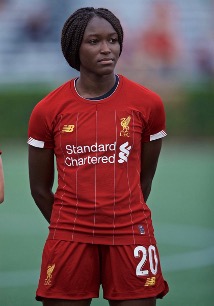
When asked whether the finance in women’s football is holding back the game, Babajide saw both sides of the story, she answered: “I do think the more experienced you are and the more you prove yourself to be a talented player, then the more likely you are to be sponsored and receive a good income.
“However, there are players who have to work a second job, so when they turn up for training or for a game, they may be tired or fatigued from their working day/week. I suppose this doesn’t help the standards of the women’s game at times, but it’s something which us as players can’t do much about.”
The difference between the finance in men’s football in the UK compared to women’s football is quite significant. In the Premier League you’ll have a large majority of players earning over £50,000-a-week.
This is significantly different to the women’s game where it’s thought that England Captain Steph Houghton is the highest earning player in the UK, earning £65,000-a-year.
Babajide thinks that women footballers deserve to be paid equally to the men, she said: “I believe that we (women footballers) have to make the same sacrifices and maybe even more than the men.
However, England International Toni Duggan feels that women shouldn’t be paid the same as men, she said: “I do believe we should be better paid, for sure, but the same as men? I don’t think so at this moment of time.”
Looking towards the future of women’s football in the UK and its financial situation, Babajide feels that it’s vital for it to improve in upcoming years: “The financial side has to get better from here.
“The bottom line is that the money in the women’s game at the minute isn’t good enough but if more people were to invest into it which looks more than likely after the last few seasons with the WSL then it should attract more fans globally, increasing the amount of sponsors involved and the revenue made by the leagues and clubs,” said Babajide
 Harvey Lawrence's Sport Blog