
Social media. A platform which allows people from all over the world to communicate with others, share their latest thoughts and find out what’s going on in the world.
But it’s not as simple as that. There is so much more to social media than what meets the eye, positively and negatively.
On one hand you have a platform which allows you to have a voice for everyone to see, sharing your opinions on the latest news, sparking intriguing conversation with others.
On the other hand is the side to social media which has become more frequent. The side which involves people (famous more so) being trolled online for things such as appearance, beliefs or opinions.
/cdn.vox-cdn.com/uploads/chorus_image/image/63760319/GettyImages_1142304730.0.jpg)
https://cartilagefreecaptain.sbnation.com/2019/5/9/18537725/tottenham-hotspur-liverpool-champions-league-final-harry-kane-injury-return-hopeful
Ultimately, I want to find out whether footballer’s are benefitting from being on social media or if they are better off staying away from it completely.
Is the constant trolling making them want to turn away from it? Do they enjoy a platform which they can interact and inspire fans? Or is the demand from people in society too great?
Semi-professional Salisbury City midfielder Charlie Cooper is one of many footballers who uses all three social media networks. Cooper, 20, revealed he has felt the positive and negative effects from using social media.
“After a game, especially if we’ve won, I will receive some confident-boosting comments about how I’ve played. Usually it’s on Twitter or the Salisbury supporters Facebook group.
“The negative feedback and comments usually come from the opposition fans after a game. Most the tweets will be ‘tongue in cheek’ comments,” he said.
“There are times where I feel more affected by what’s been said even if it’s not as bad as what I may have received the week before. It does effect me negatively but for no longer then a day,”
Charlie Cooper
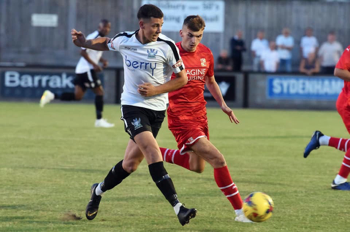
However, Cooper said that even after a defeat, he doesn’t stay away from social media. Cooper said: “I want to see what people are saying about me after a game, whether I’ve played well or not, most of my team-mates do it as well.”
Who’s actually behind the account?
Nowadays, it’s become more common for a footballer’s social media accounts to be ran by a social media company or friend.
BBC West Midlands Social Media Editor John Bray thinks that players that have their social media ran by a representative are more likely to be less effected online.
“A majority of footballers nowadays don’t run their social media accounts. This works in the player’s favours, this way any abuse sent to them through twitter is less likely to be seen by the actual player,” said Bray.

Former West Bromwich Albion Press Officer Chris Lepkowski was also in favour of player’s social media being ran by a friend or company.
Lepkowski said: “We were happy for others to run the player’s accounts as this way it was under control and the account was going to be ran professionally instead of the player himself who may say something which people will take offence too.

“We’ve seen it so many examples of it before, especially when footballers have written something offensive in the past, not deleted it and people on the platform find it and bring it back up.”

https://www.telegraph.co.uk/football/2016/08/20/andre-gray-offensive-twitter-posts-surface-on-day-burnley-strike/
The use of social media for financial reasons was also discussed by Bray. “Through being on social media players can obviously make some money through posting sponsored posts but is the nasty, unneeded comments they’re receiving worth it? I don’t think so,” he said.

https://accessaa.co.uk/revealed-the-riches-footballers-are-making-from-instagram/
A time & a place
This leads us on to another problem which footballers may find when being on social media. The timing of a tweet or post. There have been some posts which have caused players to be heavily criticised.
For example, Jesse Lingard’s post about the Manchester bombings which also involved his clothing brand’s logo in the picture for no apparent reason.
Another example is Joleon Lescott tweeting out a picture of his brand new £120,000 car an hour after losing 6-0 at home to Liverpool.
Both of these posts were greeted with numerous unsavoury replies.
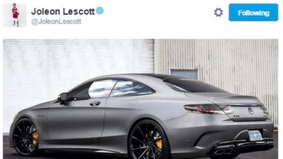
Should players be posting this kind of thing so close to a game? Are they not entitled to a life outside of football as well as everyone else has from work?
Charlie Cooper agreed that there’s appropriate times to post certain things online. “I personally wouldn’t post something non-related to football straight after a loss, I feel like you have to be respectful to the fans,” Cooper said.
When asked about social media BBC Radio 5 Live veteran Pat Murphy said: “On social media, people are usually very critical on others, whether that’s a footballer, me on the radio or another fan. You’re never going to win everyone over.”
Lepkowski would also advise the players not to tweet after a game.
“We wouldn’t want our players tweeting after a game especially if we had lost, whether it was to do with the game or not. It’s sometimes the replies to the tweets which can provoke the player to want to reply something which will get them in trouble.
“At the start of the season we would make it very clear in the briefing that we didn’t want any of the players damaging the clubs image,” he said.
The ongoing online abuse
The ‘Kick It Out’ campaign who deal with racism on and off the pitch as well online have began to step up the pressure on twitter.
Kick It Out said that in the first two weeks of the 2019/2020 season there were over 700 cases involving racism towards players.
“We will hold a meeting with the UK football policing unit and the Crown Prosecution Service to discuss how we can best develop a collaborative, efficient approach to identifying and punishing anyone who posts discriminatory abuse on Twitter.”
Kick It Out representative.
John Bray went on to speak further about the abuse some footballers receive online, “ The amount of stories on racism being published and reported on this last year on and offline is sickening. These players are human just like us but the fact that they’re on a national/global stage means people think that makes its okay to send them abuse,” he said.
Social media; is it worth it?
Overall, Cooper thinks that footballers should be on social media. He said: “footballers have still got to live a life, they shouldn’t feel like they can’t be on twitter because of a small minority.”
On the other hand Lepkowski doesn’t think it’s worth players being on social media. “It’s great for the liaison of the fans of course however I don’t get what players get out of twitter if I’m honest, it can easily be misused by players and lead them into getting into a lot of trouble.” he said,
Where as Pat Murphy was somewhat in the middle and said “If used correctly, social media can work in a players favour but that can be very hard in a media like todays.”
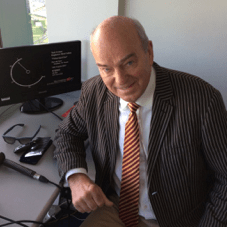
“Overall, I don’t think it’s worth being on twitter as the players are not gaining enough from it.”
John Bray
What’s next?
It’s clear that something needs to be done with online platforms for players to feel as if they want to be on it rather than feeling forced to be on it.
An idea which has been mentioned before is that players should be trained in social media to keep them as professional as possible. This is just like them being trained in how to face the media in the right way.
Who knows, this may just make them feel more comfortable when it comes to being online and facing the troublesome trolls.

 Harvey Lawrence's Sport Blog